
Kurds force rejects Damascus’ call to join Syrian army
DAMASCUS: Syrian Kurdish forces rejected a call Wednesday from the regime's army and police to join their ranks following a Turkish cross-border incursion. The appeal by Damascus comes after regime troops deployed along parts of Syria's northeaste...
The Desi Times Editorial Desk
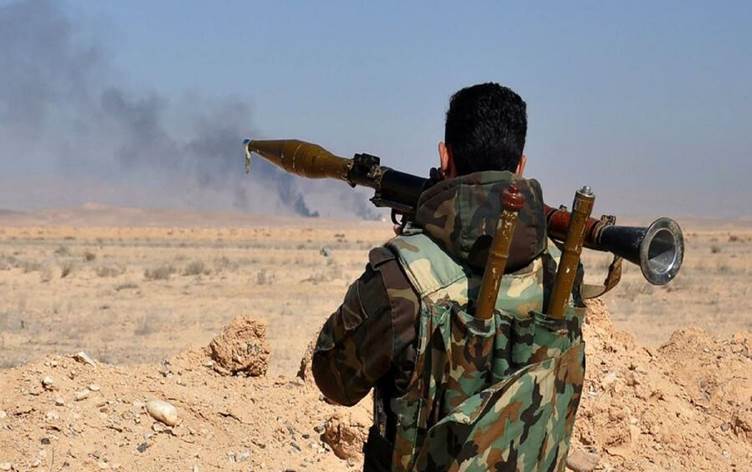

DAMASCUS: Syrian Kurdish forces rejected a call Wednesday from the regime’s army and police to join their ranks following a Turkish cross-border incursion.
The appeal by Damascus comes after regime troops deployed along parts of Syria’s northeastern border in a deal with Kurdish authorities to help stave off the Turkish offensive — launched October 9.
It is the largest Syrian army deployment in the area since 2012.
A separate ceasefire agreement reached between Ankara and Damascus-backer Moscow last week provided for members of the Kurdish-led Syrian Democratic Forces to withdraw from the border and solidified the presence of pro-government forces there.
“The general command of the armed forces is ready to welcome members of SDF units who are willing to join its ranks,” said a defence ministry statement carried by state news agency SANA.
It said all Syrians, including the Kurdish minority, were confronting “one enemy”.
Syria’s interior ministry said it was willing to provide police services to residents of the northeast, calling on members of the Kurdish internal security services — known as Asayish — to join its ranks, SANA reported.
The SDF, de facto army of the Kurdish administration in northeast Syria, turned down the proposal. It said “a unity of ranks must proceed from a political settlement that recognises and preserves the SDF’s special status and structure”.
Such a move would also require “a sound mechanism to restructure the Syrian military establishment”, it said in a statement.
In a later statement, SDF chief Mazloum Abdi said his force had proposed an arrangement “that would preserve the SDF’s special status in areas where it is present”.
This would allow his force “to be part of the Syrian defence establishment”, he wrote on Twitter.
The Turkish military and its Syrian proxies attacked Kurdish forces in northeastern Syria in early October with the aim of creating a roughly 30-kilometre (20-mile) deep buffer zone along the frontier.
Left in the lurch by a US troop withdrawal from the border area, Kurdish forces turned to the Syrian government for protection.
Damascus forces rushed north and are expected to deploy along much of the border zone, but a 10-kilometre-deep strip is set to be jointly patrolled by Russian and Turkish troops under their deal.
Related Coverage

Why the Democratic Party's Approach to Immigration is the Right One
As a South Asian, I understand the frustration many of us feel when it comes to immigration. My family, like so many others, worked hard to come here legally. We navigated a complex system, waited years, and sacrificed a lot to make this country o...
What Has the Biden/ Harris Administration Achieved?
Very often, while engaging in a discussion with friends and family, the question comes up: But what has this administration actually done? How am I benefiting from this? I thought I’d share some data points Disclaimer: This is by no means an exha...

Let’s Talk About Immigration
Republican talking points about immigration often focus on issues like a porous southern border, immigrant crime, and Kamala Harris’s role in border policy. However, these claims don't hold up against the facts. The number of migrants crossing the...