
Ethiopia invites public to visit infamous torture facility
ADDIS ABABA: Ethiopia on Friday invited members of the public to tour a notorious detention facility where high-profile political prisoners once endured abusive interrogations, weeks of solitary confinement and other forms of torture. The opening ...
The Desi Times Editorial Desk
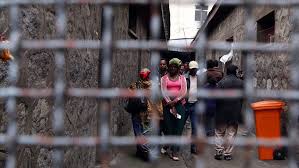

ADDIS ABABA: Ethiopia on Friday invited members of the public to tour a notorious detention facility where high-profile political prisoners once endured abusive interrogations, weeks of solitary confinement and other forms of torture.
The opening of the facility — known as “Maekelawi,” or “central” in the Amharic language — amounted to “a promise to never again repeat the cruel, inhuman and degrading treatment or punishment of any detainee in the country,” Ethiopia´s federal police said in a statement.
Prime Minister Abiy Ahmed drew praise for freeing political prisoners after he assumed office in April 2018, the same month Maekelawi was closed.
But critics contend that his government has recently embraced the repressive tactics of previous regimes, especially after the assassination of five military and government officials in June — an event that posed the greatest threat yet to his hold on power.
On Friday, top justice officials including Attorney General Berhanu Tsegaye and Supreme Court Chief Meaza Ashenafi walked with scores of ordinary Ethiopians through the grounds of Maekelawi, which had been spruced up for the occasion.
The walls of torture rooms were given a fresh coat of yellow paint, and artwork depicting scenes from Ethiopian history lined the main corridor of a dark, forbidding section referred to by inmates as “Siberia”.
Among the crowd was Zelalem Workagegnehu, a former blogger turned opposition figure who was held for four months in “Siberia” in 2014 after being accused of passing information to a “terrorist organisation”.
He acknowledged feeling “nervous” about returning but his fear quickly dissipated. He even took time to embrace a prison guard he remembered from his time behind bars.
“I never thought that this would happen in my life,” he said. “But now as you can see me, I´m a bit relaxed and enjoying the moment.”
After showing AFP the cramped room where he once spent 41 days in solitary confinement, Zelalem said his only objection was that the space had not been preserved exactly as it was.
“One of the biggest mistakes is they painted the inside of the rooms. Much of us we are writing our history, our prayers, our tortures here in this building,” he said. “People need to read that. People need to know what happened in here.”
Ethiopian authorities intend to turn Maekelawi into a museum.
Daniel Bekele, a former political prisoner who was recently named head of the Ethiopian Human Rights Commission, said this represented “a major turning point both symbolically and literally as a commitment to end the history of torture in Ethiopian prisons.”
But he warned that recent judicial proceedings against critics and journalists, some of whom have been charged under controversial anti-terrorism legislation, are a sign that the reform process is far from complete.
Related Coverage

Why the Democratic Party's Approach to Immigration is the Right One
As a South Asian, I understand the frustration many of us feel when it comes to immigration. My family, like so many others, worked hard to come here legally. We navigated a complex system, waited years, and sacrificed a lot to make this country o...

What Has the Biden/ Harris Administration Achieved?
Very often, while engaging in a discussion with friends and family, the question comes up: But what has this administration actually done? How am I benefiting from this? I thought I’d share some data points Disclaimer: This is by no means an exha...

Let’s Talk About Immigration
Republican talking points about immigration often focus on issues like a porous southern border, immigrant crime, and Kamala Harris’s role in border policy. However, these claims don't hold up against the facts. The number of migrants crossing the...